 The Dutch Gag 2 Ring Bit is made from stainless steel and is a lot less severe than a 3 ring gag. It works as a lever action, raising the bit in the horses mouth, helping the rider maintain control of the horse. When the reins are placed on the lower ring, poll pressure is applied, and when using this gag, it is recommended that two reins be used.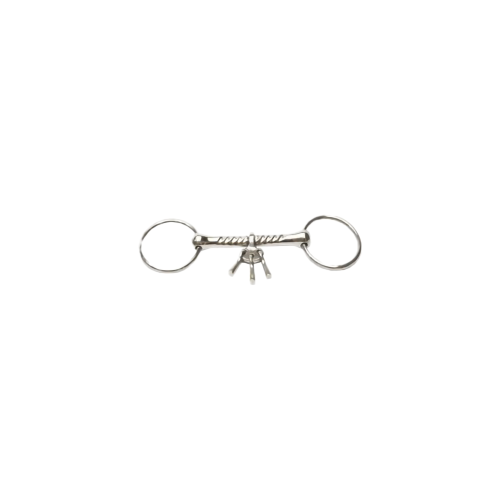
- Comes in stainless steel.
- 4.5 inches.
 The Chifney, also known as an anti-rearing bit, is a horse bit designed for leading spirited horses and ponies. The Chifney is attached to a headpiece and has a single loose ring for the lead rope to attach to at the back of the horse’s chin. The thin bit with V shaped mouth will dig into the horse’s tongue should the horse try to rear or pull and can be very effective. The anti-rearing bit should be used with care as with any severe type of horse bit and is for leading only. Comes in stainless steel.
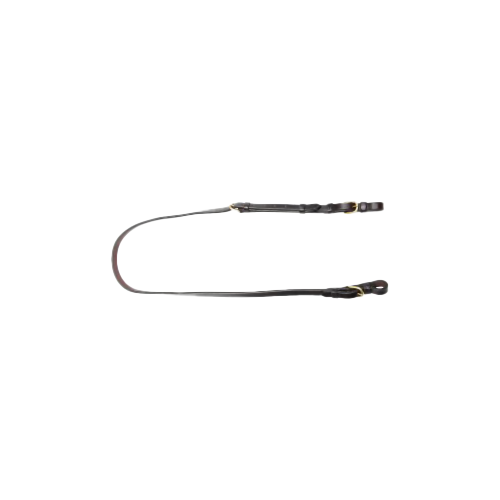 Standard length, full grain leather strap which attaches to a Chifney bit. Comes with solid brass hardware.
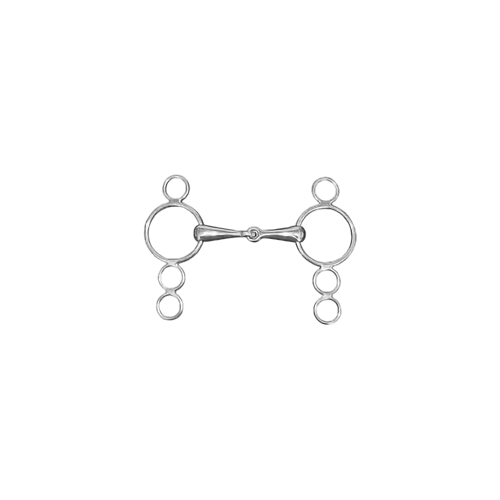 Continental Cheeks The Continental Gag should be worn with 2 reins preferably; the first rein should be used on the snaffle ring, which is the first ring adjacent to the mouthpiece. When the first rein is attached to the snaffle rein it is used just like a loose ring hanging cheek bit, which uses poll pressure and lip pressure due to the sliding loose ring also applies various pressures in the mouth depending on the mouthpiece it is in conjunction with. When the second rein is attached to the ring below, the pressures are increased as the lower rings produce more leverage. In the instance of using 2 reins then this bit can be used as a hanging cheek bit and then when more help is required, the second rein can be brought into play. If the bit is only used with one rein on the lower ring, then the pressure in applied constantly and no pressure release is available for the horse. The gag produces a head raising action and is often used for cross country and/or jumping where the head needs to be raised quickly in order to gain control and so to get ready for the next jump. Single Jointed Bits The single joint puts pressure on the sides of the tongue, on the lips and on the bars due to the nutcracker. The single jointed bits also may have a head raising action so would be less suitable for your horse if they ride with a high head carriage or above the bit. Also breeds such as Irish Draughts, may have particularly large tongues, therefore having less room in the mouth for a single jointed bit as this pushes the bit nearer the roof of the mouth, also Arabs and alike may have a low palate, both of these examples may not benefit from the single jointed bits as the nutcracker action may cause brushing of the roof of the mouth.
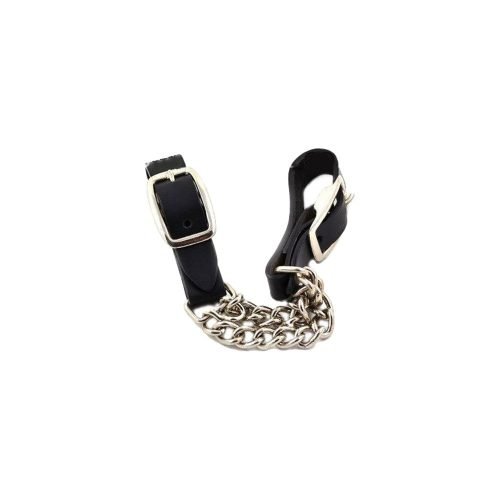 Quality leather double curb chain.
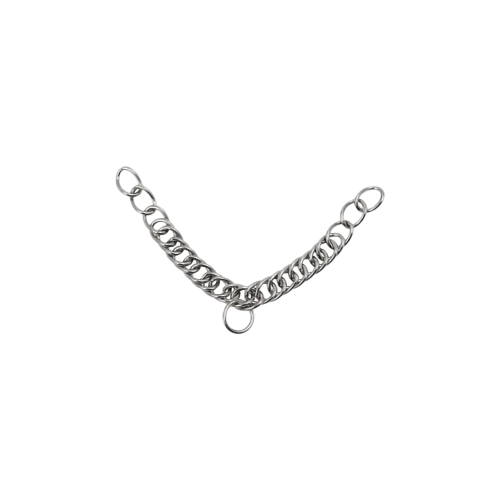 Stainless steel. Including hooks.
 Stainless Steel Eggbutt Snaffle. The traditional eggbutt snaffle tends to have a straight-arm, single-jointed mouthpiece and is designed to give stability for the horse to stretch forwards and down. The mouthpiece is designed to act on the outer edges of the tongue with a squeezing action and provide control. An eggbutt cheek is often a good choice for a sensitive horse that needs the stability it provides to encourage him to confidently stretch into the bit. Eggbutt cheeks are also a great choice for horses with lips that protrude from the face, as you can get a good snug fit without the risk of rubbing. The eggbutt can be easier to steer with than a loose-ring as the fixed bar action on the sides of the mouth are more precise.
 Flexi Jointed Full Cheek Snaffle Bit has been crafted with moulded plolyurethane plastic to the middle of the bit that makes it very soft and kind on the horses mouth, perfect for young, sensitive horses that have just been backed as well as horses which are not comfortable with stainless steel bits.
- Snaffle bit
- Lightweight polyurethane mouldings
- Stainless steel
- Kind and soft to the mouth
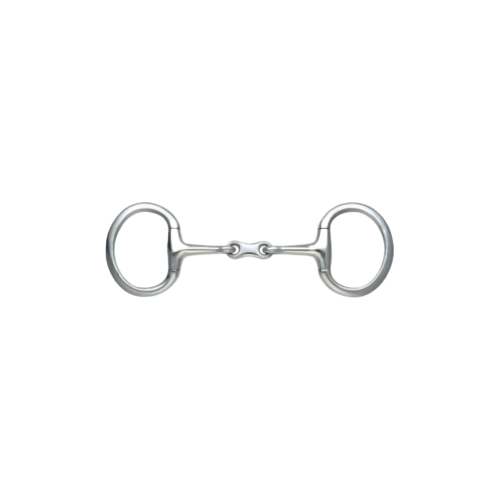 Eggbutt French Link Snaffle features:
- A mild bit good for novice or soft mouthed horses, the eggbutt cheek being good for riders with less than steady hands.
- Often confused with the far more severe Dr bristol, the difference being the plate on the french link is shaped and lies flat on the tongue so does not dig in at all.
 Gel bit guards. Diameter: 8,5 cm


N1 Business Park,
Unit 4 Swords Road,
Nevinstown West,
Swords, Co. Dublin,
K67 V6Y7
Open In Google Maps
Need Help? Call Us On:
Opening Hours:
Monday - Friday: 10am -5.00pm
Saturday: 10.00am - 5pm
Find Us Here:
© 2025 Horse Mad Store. Registered Business: 897 6659 | All Rights Reserved | Privacy Policy | Terms & Conditions |
Site design by True Design

© 2025 Horse Mad Store. Registered Business: 897 6659 | All Rights Reserved | Privacy Policy | Terms & Conditions | Site design by True Design